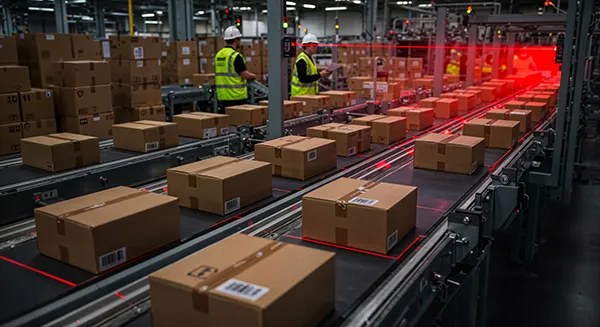
Ability to orchestrate, prioritize, and fulfill orders originating from multiple sales channels—e-commerce, physical retail, marketplaces, B2B, distributors, and direct sales—driven by a unified view of demand, inventory, and operational capacity.
Analytics and decision-making
Ability to transform operational and transactional data into actionable insights, providing real-time visibility and advanced analytics to support tactical and strategic decisions across the entire supply chain.
Business rules and automation
invasOMS’s capability to govern and automate demand orchestration through dynamic business rules, specifically designed for scenarios of high volatility and extreme demand.
Delivery and last-mile management
invasOMS is built to plan, orchestrate, and monitor delivery execution, from the initial purchase promise to final delivery. This ensures order fulfillment even under conditions of high demand and operational stress, such as peak commercial events.
Omnichannel distributed inventory
invasOMS’s capability to unify, visualize, and orchestrate inventory distributed across multiple nodes—distribution centers, retail stores, dark stores, logistics providers, suppliers, and stock-in-transit—operating as a single logical source of truth for all sales channels.
Retail companies with e-commerce, omnichannel operations, and physical stores can deeply transform their operations with invasOMS.
Selection of the best inventory sources Ad-hoc rules (business-specific) Order splitting when applicable Order service zones and geolocation Event management across the ecosystem
OUR SOLUTION DELIVERING VALUE TO OUR CLIENTS ACROSS THE REGION:
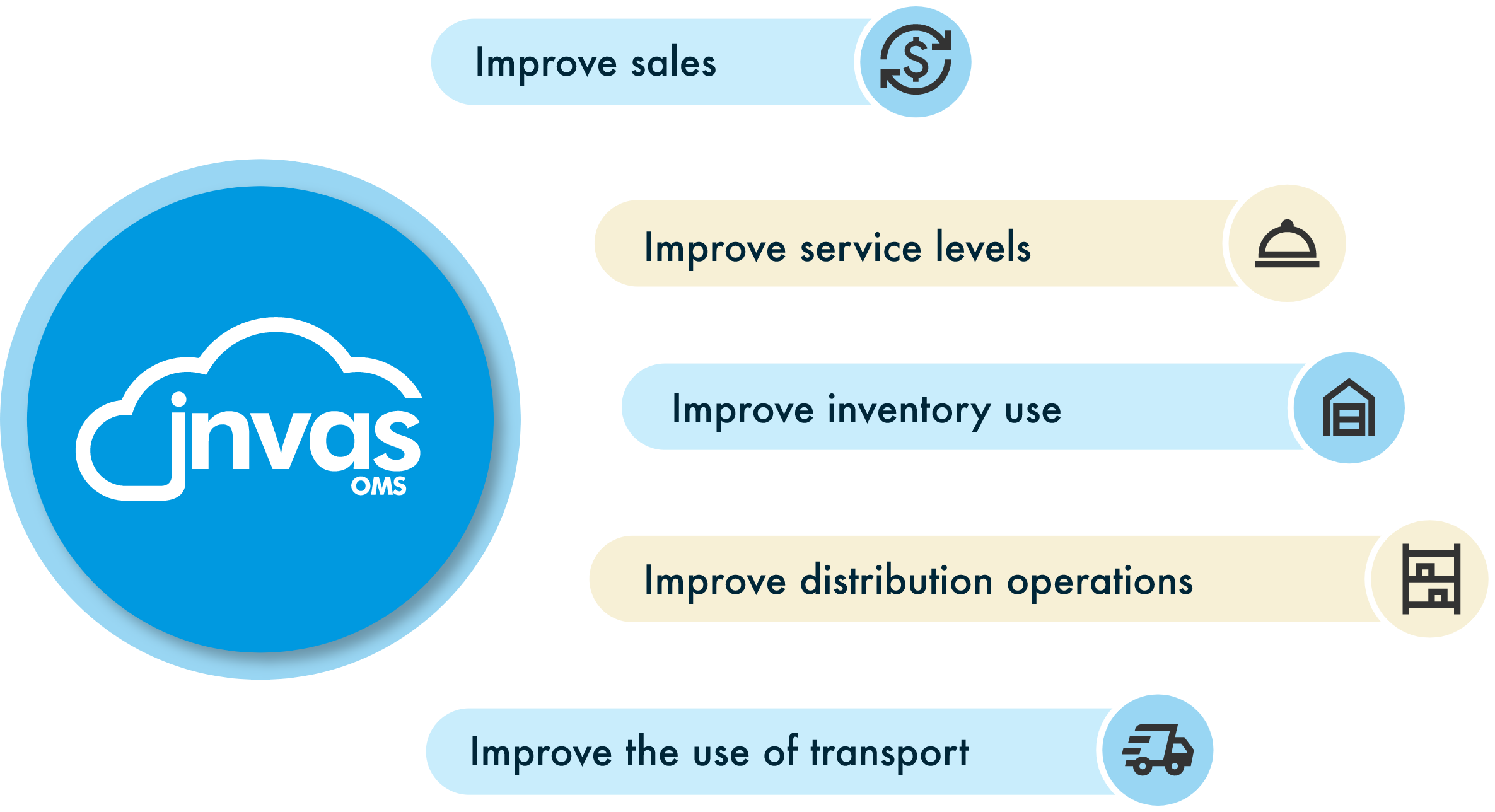
• Drives Revenue Growth • Enhances Customer Experience • Supports Operational Efficiency • CProvides Control and Governance • Streamlines and Enables Business Scalability • Intelligence for Decision-Making • Risk Mitigation
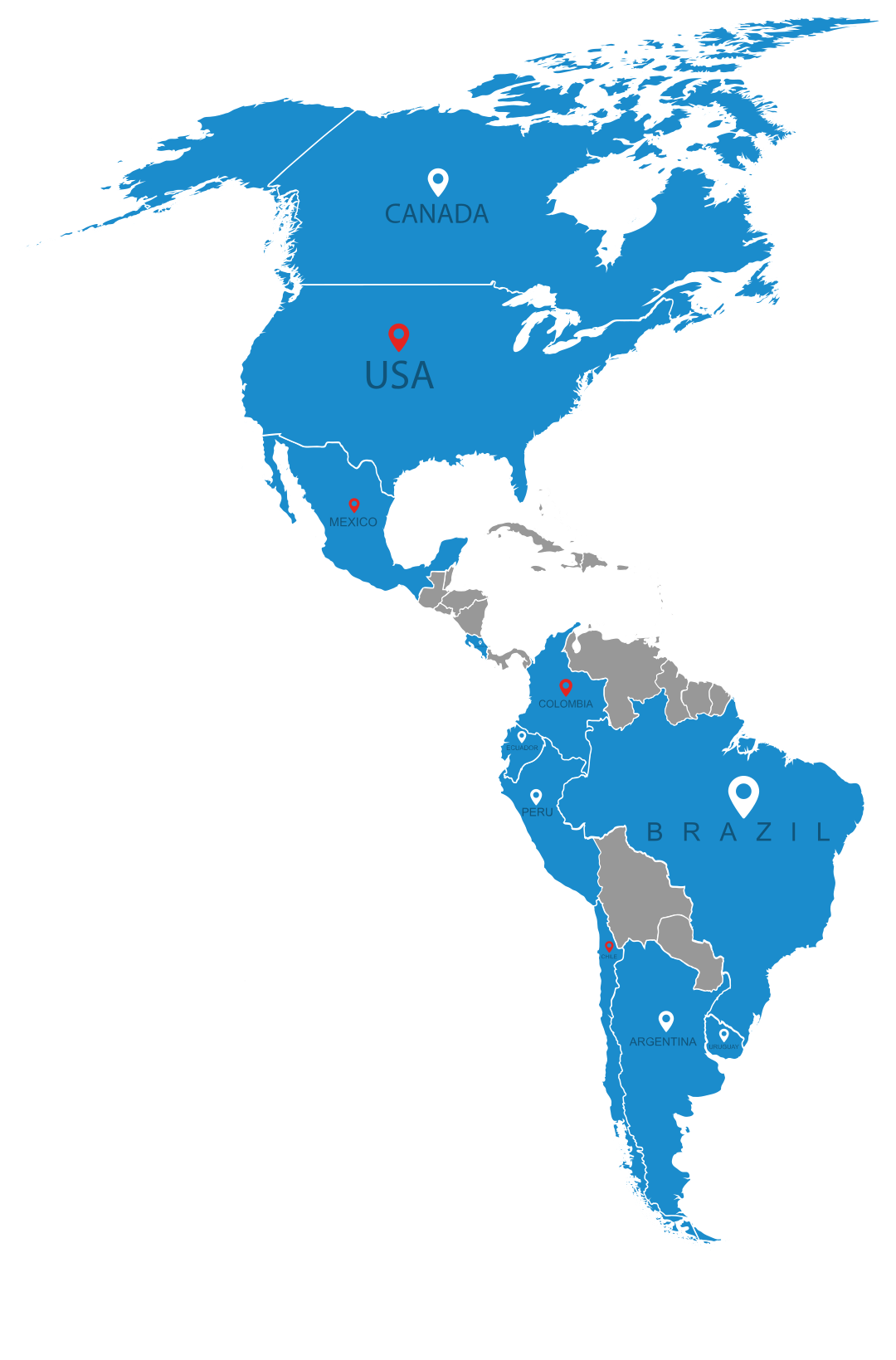
Serving clients in the primary cities across AMERICA.
invasOMS
An omnichannel order management solution designed for companies that need to orchestrate their entire demand centrally and efficiently. It provides high visibility throughout the order lifecycle, with a core focus on customer service levels.
invasOMS
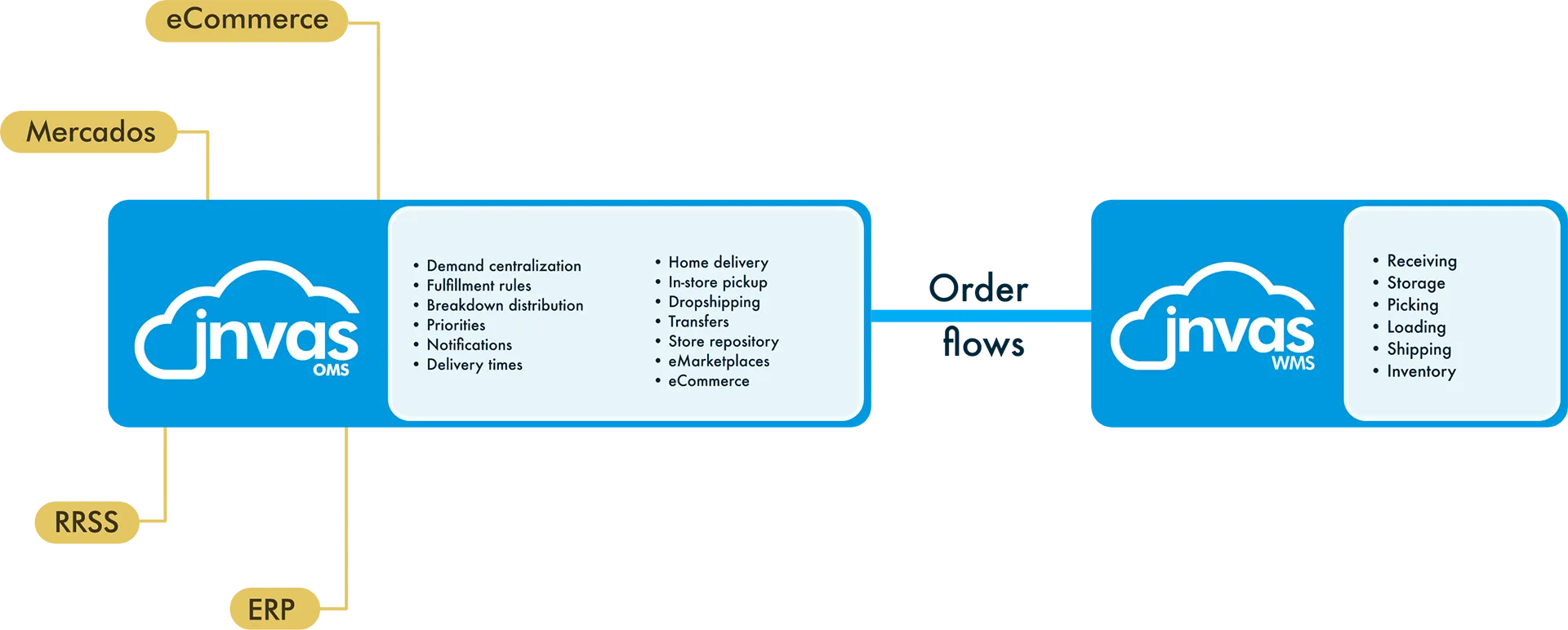
Specifically, core functionalities integrated with invasWMS include:
End-to-End Visibility: Provides transparency throughout the entire order lifecycle.
Optimal Sourcing: Identifies the best shipping source (optimal warehouse or store).
Geo-located Allocation: Selects the most suitable stock location based on geolocation and availability.
Shortage Management: Manages stock distribution in the event of stockouts.
Multichannel Capture: Facilitates order capture from diverse demand sources.
Carrier Selection: Chooses the “best” courier based on pricing and committed delivery times.
Business Rule Engine: Allows for easy configuration of specific business rules.
SmartDates: A Delivery Suggestion Calculator that supports all channels by considering warehouses, stores, transit times, and logistical capacities.
INTEGRAL VISION
invasOMS integrated into your ecosystem is more than just a logistics tool; it is a strategic platform that empowers the entire organization to align around customer demand. It optimizes how and from where deliveries are made, driving higher sales, better service quality, and lower operational friction.
KEY REQUIREMENTS
Does your business need to fulfill orders from diverse channels such as eCommerce / B2B / Traditional Retail / Social Media or others?
Global Inventory: Real-time availability across the entire chain based on geolocation.
Capacity Management: Management of DCs, internal warehouses, 3PLs, and retail stores.
Freight Management: Real-time freight pricing with respective lead times.
Predefined Lead Times: Logistics timelines based on Service Level Agreements (SLAs).
Order Orchestrator: Full lifecycle visibility.
+ fulfillment
+ capacities
+ lead times
+ end-to-end viewer
A centralized service to respond to channels with:
Estimated delivery date ranges (including holidays).
Node-specific calendars and operational cut-off times.
Home Delivery for “On Order” (Pre-sale) with and without Cross-docking (XD).
Home delivery & in-store pickup variations
100% Adaptable Projects for Your Business:
invasOMS can be implemented as a custom-tailored project based on each client’s specific reality, adapting seamlessly to your unique processes, business rules, and omnichannel strategy.
Discover how invasOMS can transform your operation by accelerating decision-making, boosting operational efficiency, and sustainably elevating your customer experience.
Transform your Order Management with invasOMS!
The Value of invasOMS
There are multiple benefits to consider when evaluating the value that invasOMS brings to your business. The dimensions presented below may have a greater or lesser impact depending on the operational reality, the omnichannel maturity level, and the strategic objectives of each organization.
Key Specific Benefits:
Inventory Optimization:
Complete stock visibility across stores and warehouses, reducing stockouts and overstock scenarios.
Faster Deliveries:
By shipping from the nearest location, shipping times are significantly reduced, and the overall customer experience is improved.
Operational Adaptability:
The solution adjusts to your company’s specific processes, eliminating the need to adopt generic workflows.
Flexible and Scalable Integration:
Standard APIs and cloud architecture allow for easy integration into your existing tech ecosystem and scale alongside your business growth.
Los clientes seleccionan invasWMS por su flexibilidad operativa, rápida adaptación a procesos complejos y bajo costo total de propiedad, logrando impactos medibles en eficiencia, ahorro de costos y calidad de servicio. La combinación de resultados concretos, metodología estructurada, experiencia regional e internacional, y un equipo altamente calificado posiciona a invasWMS como una decisión de inversión segura y de alto retorno.
invasWMS helped us improve traceability across all sales channels. It has significantly increased our order accuracy and streamlined our picking operations.
Alvaro Reyes R.
Provaltec - Operations and Logistics Manager
María José Clavero V.
Distribuidora Oviedo - Assistant Manager of Development and Management Control
With the implementation of invasWMS, we have significantly reduced inventory discrepancies. The system has enabled us to efficiently manage product expiration dates through automated alerts, maintain precise control over picking processes, and adapt the operation to our specific business needs.
In addition, invasWMS provides full inventory control and end-to-end traceability, allowing us to maintain extremely low inventory variance levels.
I highly recommend invasWMS for its ease of use, versatility, and adaptability to client requirements. It also offers robust integration capabilities with any ERP or internally developed systems proposed by the IT team. This is further reinforced by an outstanding support team that is always ready to assist.
invasWMS has significantly improved our inventory management by streamlining our operational processes and providing real-time visibility across all inventory — whether in distribution centers, warehouses, or in transit. The platform supports our entire receiving and shipping workflow and enables us to generate high-value operational and analytical reports.
I highly recommend invasWMS for its strong performance and excellent technical support. The platform is intuitive, easy to manage, and has become a key tool in the efficient management of our company’s inventory.
Mundo Transfer - Subgerente de Operaciones Logísticas
InvasWMS has significantly improved our internal processes by providing timely, real-time information that supports critical decision-making across both sales and operations.
It has also become the central data hub for integrating our core business systems, including ERP, e-commerce platforms, point-of-sale systems, and in-person sales channels.
InvasWMS is a user-friendly solution that delivers the visibility and traceability required by sales, administrative, and logistics teams. Its flexibility and adaptability across different operational scenarios make it a high-value WMS for our organization.
While “OMS” can be interpreted differently depending on the company, it is generally defined as the platform that orchestrates the entire order lifecycle—from the moment it is captured across any sales channel to its fulfillment and final delivery to the customer.
Unifies visibility of distributed inventory across the entire logistics network.
Decides how, from where, and when to fulfill each order (fulfillment logic).
Applies business rules to prioritize orders, meet SLAs, and optimize costs.
Coordinates operational systems (WMS, TMS, ERP, carriers).
Manages exceptions, changes, cancellations, and returns.
Ensures a reliable and consistent delivery promise for the customer.
In short, the OMS acts as the “brain” of omnichannel fulfillment: it converts demand into efficient logistics execution, aligning sales, inventory, and operations to maximize service levels and profitability.
2. What does an OMS System solve?
An OMS resolves critical business challenges, primarily the disconnect between commercial demand and logistics execution, especially in omnichannel environments and distributed inventory settings.
3. What are the benefits of an Order Management System?
Depending on the specific business environment, the key highlights include:
Order Fragmentation by Channel: Centralizes orders from e-commerce, retail, B2B, marketplaces, and direct sales into a single, governed flow.
Lack of Inventory Visibility: Unifies distributed inventory (DCs, stores, 3PLs, stock-in-transit) into a single logical view, enabling reliable ATP/CTP (Available/Capable to Promise) and preventing overselling.
Manual Fulfillment Decisions: Automates the decision of where and how to fulfill each order based on business rules, SLAs, capacity, and costs.
Inefficiency During Peak Demand: Absorbs surges like Black Friday or Cyber Monday by prioritizing orders, balancing node workloads, and protecting service levels without operational collapse.
Broken Delivery Promises: Ensures realistic and consistent promises by channel or segment, reducing re-processing, complaints, and churn.
Reactive Exception Management: Detects stockouts, delays, or capacity constraints and re-orchestrates orders in real-time.
Poor End-to-End Traceability: Provides full visibility into order status, from capture to delivery and returns.
Sales, Ops, and Logistics Misalignment: Acts as an orchestration layer, aligning commercial strategy with real operational capacity.
4. What type of companies need an OMS?
An OMS is ideal for companies where fulfillment complexity is growing faster than the operation, and an intelligent orchestration layer is required to sustain sales, service levels, and profitability. Key profiles include:
1. Omnichannel Companies
Retailers with physical stores + e-commerce
DTC brands
multichannel sellers.
Typical issue: overselling and inconsistent delivery promises.
2. Companies with Distributed Inventory
Multiple DCs.
Stores, dark stores, and 3PLs.
Typical issue: not knowing which location holds the “best” stock to fulfill an order.
3. High-Volume or Peak-Demand Businesses
Operations prone to Black Friday, Cyber Day
Seasonal spikes.
Typical issue: operational collapse and manual prioritization.
4. B2B and B2C Companies
Distributors and wholesalers with complex, partial, or scheduled orders.
Typical issue: manual exception management and unreliable promises.
5. Companies in Growth/Expansion:
Scaling to new channels or countries.
Typical issue: when the ERP or e-commerce platform is no longer enough to orchestrate orders.
6. Customer Experience-Focused Brands
Companies with demanding SLAs or those differentiating through speed and flexibility.
Typical issue: poor post-purchase experience due to fulfillment failures.
7. Complex Tech Ecosystems
Environments using ERP + WMS + TMS + e-commerce.
Typical issue: fragmented decision-making and lack of a central orchestration layer.